Why Apple Must Stays Cloudy After Pressing
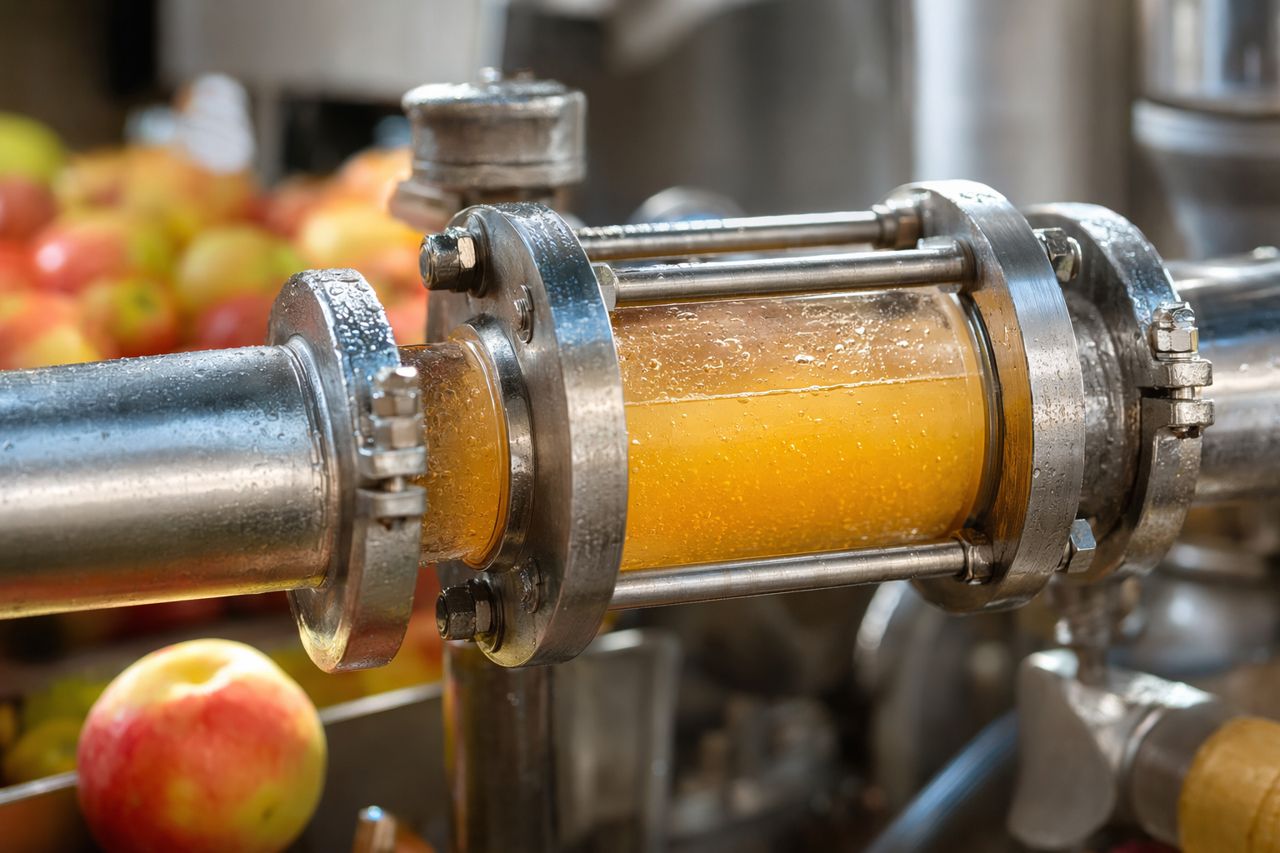
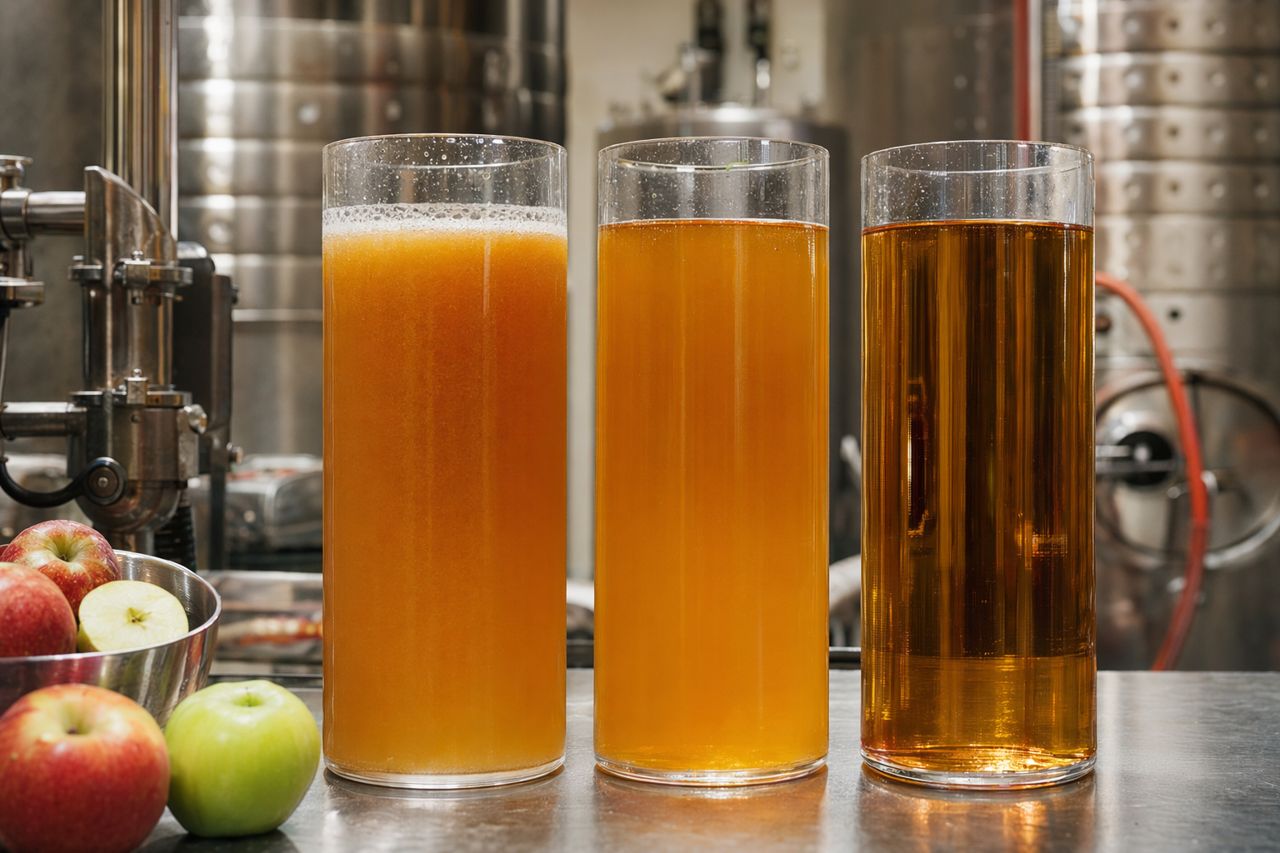
Fresh apple must rarely comes off the press bright. Even with clean fruit, sharp milling, and a well-managed press cycle, the first sight glass often shows a dense amber haze: soft pulp fines, soluble pectin, possible starch carryover, tannin complexes, protein-colloid material, and microscopic particles that stay suspended long after the press bed has emptied.
For a hard cider mill, that cloudiness is not just cosmetic. It affects settling time, tank turns, filtration load, aroma expression, fermentation predictability, and yield from every bin of fruit. Understanding what is holding the haze together helps you decide whether to wait, rack, filter, fine, or use a targeted enzyme approach.
Enzymesbridge supplies enzyme solutions for cider production with that production reality in mind: fruit variability, seasonal pressure, press capacity, cellar scheduling, and the need for clean, repeatable clarification without stripping the cider of its orchard character.
Cloudy Must Is a System, Not a Single Problem
Cloudiness after pressing is often described as “pectin haze,” but pectin is only one part of the matrix. Apple must is a moving suspension made from:
- Soluble pectin from cell walls and middle lamella
- Pulp fines released during milling and pressing
- Starch granules from immature or late-season fruit conditions
- Phenolic and tannin compounds that bind with proteins and colloids
- Air, foam, and microbubbles introduced during transfer
- Natural yeast and microbial load depending on fruit handling
- Oxidized browning compounds that deepen color and visual haze
The same press may produce clear-running juice in one lot and stubborn turbidity in the next. Variety, maturity, storage condition, milling gap, press pressure profile, pomace depth, and temperature all change how the must behaves.
That is why a calm, diagnostic approach matters. The goal is not to make every cider water-bright at all costs. The goal is to control the clarification pathway so the cider maker can protect yield, style, aroma, and downstream throughput.
Pectin: The Main Haze Builder in Apple Must
Pectin is a natural structural carbohydrate in apple tissue. It helps apples hold their shape on the tree and through storage. During milling and pressing, pectin dissolves into the juice phase and increases viscosity. That higher viscosity can slow juice release, trap fine particles, delay settling, and make filtration feel heavy.
In cider production, pectin can show up as:
- Slow free-run separation from the mash
- Sticky pomace that resists clean drainage
- A soft, persistent haze after overnight settling
- Poor compaction of lees in tank
- Increased load on centrifuge, flotation, crossflow, or sheet filtration
- Brightness that improves slowly but never quite finishes
Pectinolytic enzyme solutions help reduce that structural hold. When pectin is broken down into smaller fragments, the must usually drains more freely, suspended particles settle or separate more predictably, and the juice becomes easier to clarify without aggressive mechanical correction.
For a cider mill, that can mean faster press cycles, better extraction from the same fruit, cleaner tank bottoms, and fewer surprises before fermentation.
Starch: The Quiet Cause of Stubborn Haze
Starch is less obvious than pectin, but it can create real clarification problems. Apples can carry more starch when fruit is less mature, unevenly ripened, or processed under certain seasonal conditions. Some varieties also shift differently through the starch-to-sugar conversion window.
If starch remains in the must, it can form a persistent haze that does not respond the way pectin haze does. It may survive initial settling, show up after chilling, or become more visible when the cider is moved, blended, or prepared for packaging.
Signs that starch may be contributing include:
- Haze that remains after pectin-focused treatment
- Cloudiness associated with early-season fruit
- Variable clarity between orchard lots of the same variety
- Fine, milky turbidity rather than coarse pulp suspension
- Filtration that blinds sooner than expected
Amylase-based enzyme support can help reduce starch-related haze risk when fruit maturity or processing conditions point in that direction. The key is not to assume every cloudy must is only pectin. A cider-specific enzyme program should account for both pectin and starch behavior when the crop demands it.
Tannin and Phenolics: Structure, Astringency, and Colloid Behavior
Tannin is part of what makes cider taste like cider. It gives structure, grip, bitterness, dryness, and length. In bittersweet and bittersharp fruit, tannins are not a defect; they are style-defining compounds.
But phenolics also participate in haze formation. Tannins can bind with proteins, polysaccharides, and other colloids, creating complexes that remain suspended or later drop as sediment. Oxygen exposure, fruit damage, milling intensity, and holding time can all influence how these complexes form.
For cider makers, the challenge is balance. Over-correcting can flatten aroma and remove valuable structure. Under-correcting can leave unstable haze, rough mouthfeel, and unpredictable tank behavior.
Enzyme treatment is not a tannin eraser. Instead, it can reduce the pectin and solids network that traps phenolic material in suspension. When the must clarifies more cleanly, tannin expression often becomes easier to manage through blending, racking, fining strategy, and fermentation decisions.
Solids: Not All Suspended Material Is Bad
Fresh-pressed must carries solids by design. Some solids provide nutrients, aroma precursors, and fermentation texture. Too much solids load, however, can create operational friction.
High solids can lead to:
- Slower clarification before yeast pitch
- Heavy lees volume and juice loss at racking
- More tank space tied up in settling
- Increased risk of reductive fermentation notes
- Greater filtration pressure and shorter filtration runs
- Inconsistent fermentation speed between lots
The target is not always maximum clarity before fermentation. Many cider makers prefer a controlled level of turbidity for fermentation health and style. The practical question is whether the solids are settling predictably and whether the cellar can hit its schedule without sacrificing yield.
A well-matched enzyme solution supports that control. It helps release juice from the fruit matrix, breaks down haze-forming structure, and gives the mill a more dependable starting point for settling, flotation, centrifugation, or fermentation.
Why Pressing Alone Does Not Solve Cloudiness
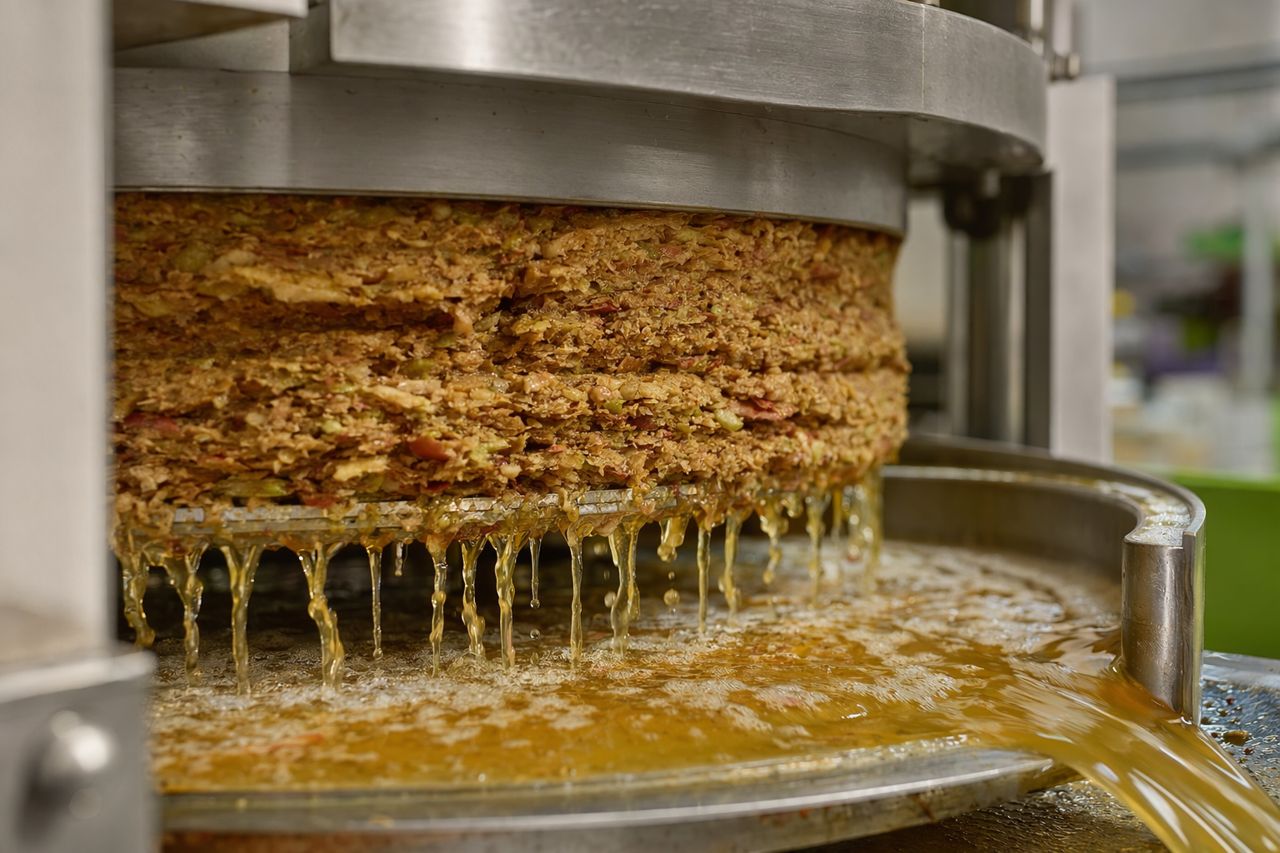
Mechanical pressure separates liquid from pomace, but it does not fully solve the chemistry of the must. In fact, a harder press can sometimes increase the haze burden by forcing more fine pulp, skin compounds, and colloidal material into the juice.
Common press-related contributors include:
- Over-milling that creates excessive fines
- Press programs that ramp too aggressively
- Deep pomace beds with slow internal drainage
- Re-press fractions with higher phenolic and solids load
- Long mash hold times before pressing
- Warm fruit that releases pectin more readily
This is where enzyme timing becomes important. Enzyme use before or during mash handling can improve cell wall breakdown and drainage. Enzyme use after pressing can support clarification in tank. The right approach depends on fruit condition, equipment layout, and whether the priority is yield, brightness, speed, or all three.
What Cider Enzymes Can Improve in a Hard Cider Mill
As an enzyme supplier for cider production, Enzymesbridge focuses on practical outcomes the mill can measure in the cellar, not abstract lab language.
Targeted cider enzyme programs can support:
- Higher juice recovery from pressed apple mash
- Faster press throughput during peak fruit intake
- Lower juice viscosity for cleaner transfer and separation
- More compact lees and reduced racking loss
- Quicker clarification before fermentation or packaging
- Reduced filtration burden and steadier flow
- More consistent fermentation starts from lot to lot
- Better aroma retention by avoiding excessive corrective handling
- Cleaner process decisions across varieties, harvest windows, and storage lots
The best result is not always the brightest must in the shortest time. The best result is a controlled process that respects cider style while giving production the speed and reliability it needs.
When to Suspect Pectin, Starch, Tannin, or Solids
If the must looks thick, glossy, and slow to drain
Pectin is likely a major contributor. Look at milling, mash temperature, fruit ripeness, and press cycle behavior. A pectinolytic approach may improve drainage and settling.
If haze remains after normal settling and pectin management
Starch may be part of the issue, especially with early-season or unevenly matured fruit. Consider whether an amylase-supported approach fits the lot.
If the must is dark, bitter-edged, or reactive after oxygen exposure
Phenolic load and tannin complexes may be influencing appearance and stability. Enzyme treatment can help reduce the suspended matrix, but blending and oxygen management remain important.
If lees are fluffy, loose, and high-volume
Fine solids and pectin structure may be preventing compact settling. Enzyme-supported clarification can improve lees density and reduce juice loss.
If filtration blocks quickly despite visible settling
Colloidal material may still be present even when the tank looks reasonably clear. Earlier enzyme intervention can reduce downstream filtration stress.
Building an Enzyme Plan Around Your Mill
No two cider mills run the same way. A high-volume mill pressing dessert fruit for a clean, modern cider has different needs than a producer working tannic bittersweets for slow fermentation and blended structure.
Before recommending an enzyme solution, Enzymesbridge looks at the production context:
- Apple varieties and harvest window
- Fruit maturity, storage, and temperature
- Mill settings and mash texture
- Press type and press cycle goals
- Whether treatment is preferred in mash or juice
- Desired clarification level before fermentation
- Fermentation style and yeast management
- Existing separation equipment
- Filtration constraints and packaging schedule
- Sensory goals for aroma, body, and tannin structure
That process-first view is what separates a generic additive decision from a cider-specific enzyme program.
Practical Takeaway
Apple must stays cloudy after pressing because the juice is carrying a living orchard matrix: pectin, starch, tannin complexes, pulp fines, colloids, air, and natural solids. Pressing separates juice from pomace, but it does not automatically create a stable, clear fermentation base.
For a hard cider mill, the opportunity is control. With the right enzyme solution, cloudy must can become easier to press, easier to clarify, easier to ferment, and easier to move through the cellar without unnecessary yield loss or aroma damage.
Enzymesbridge helps cider producers choose enzyme systems that match the fruit, the press, the tank plan, and the finished cider style.
Request a Quote
If cloudy must is slowing your press schedule, tying up tanks, or loading your filtration line, Enzymesbridge can help you build a cider-specific enzyme plan.
Request a quote through the on-site form and tell us about your fruit, press setup, clarification target, and production volume. We’ll respond with a practical recommendation for your hard cider mill.