Sanitary Transfer and Tank Turnover in High-Volume Cideries
In a high-volume cidery, tank space is not just storage. It is production capacity. Every hour a tank stays tied up with slow-settling juice, viscous transfers, heavy lees, or repeated rework is an hour that can push pressing, fermentation, blending, and packaging out of rhythm.
Good sanitation still starts with disciplined cleaning, verified rinse-down, and controlled transfer practices. Enzymes do not replace that work. But the right enzyme program can make cider easier to move, easier to clarify, and easier to schedule — which directly affects tank turnover.
Enzymesbridge supplies enzyme solutions for cider production built around practical mill priorities: press efficiency, juice release, viscosity reduction, clarification speed, aroma retention, and consistent fermentation readiness.
Where transfer problems usually begin
Apple juice is not a simple liquid at the mill scale. It carries soluble pectin, fine fruit solids, starch carryover in some fruit lots, cell-wall fragments, and oxidation-sensitive aroma compounds. During a busy run, those variables show up in familiar ways:
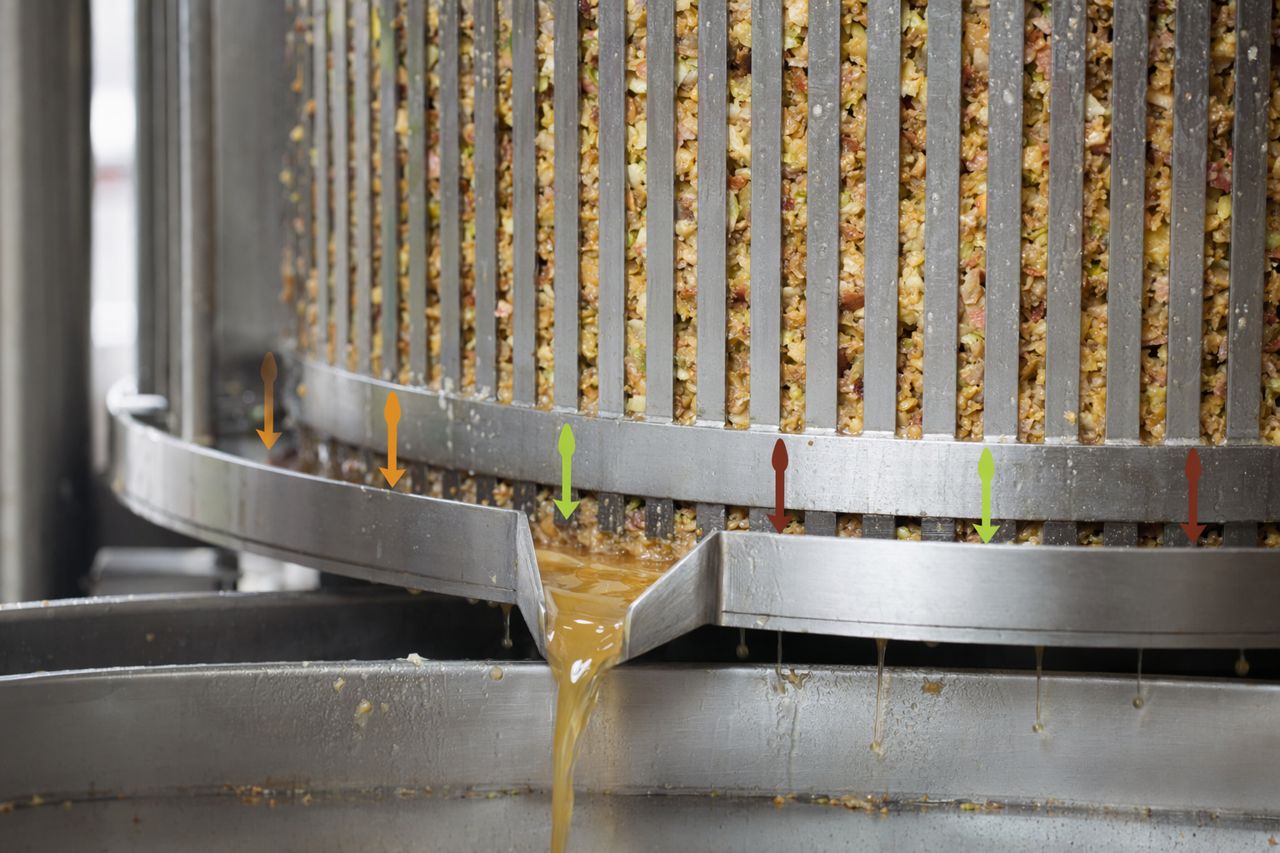
- Slow draining at the press
- Thick juice that loads pumps and hoses harder than expected
- Excessive foam or uneven flow during transfer
- Persistent haze that delays tank release
- Heavy lees volume after settling or flotation
- Longer-than-planned tank occupancy before fermentation
- Increased handling that raises exposure risk
When those symptoms stack up, sanitation becomes harder to protect. More time, more transfers, more openings, and more rework all create additional opportunities for process drift.
Enzymes as a flow-management tool
For cider makers, enzyme value is not abstract. It shows up when fruit breaks down more predictably, juice separates more cleanly, and tanks turn faster without forcing the process.
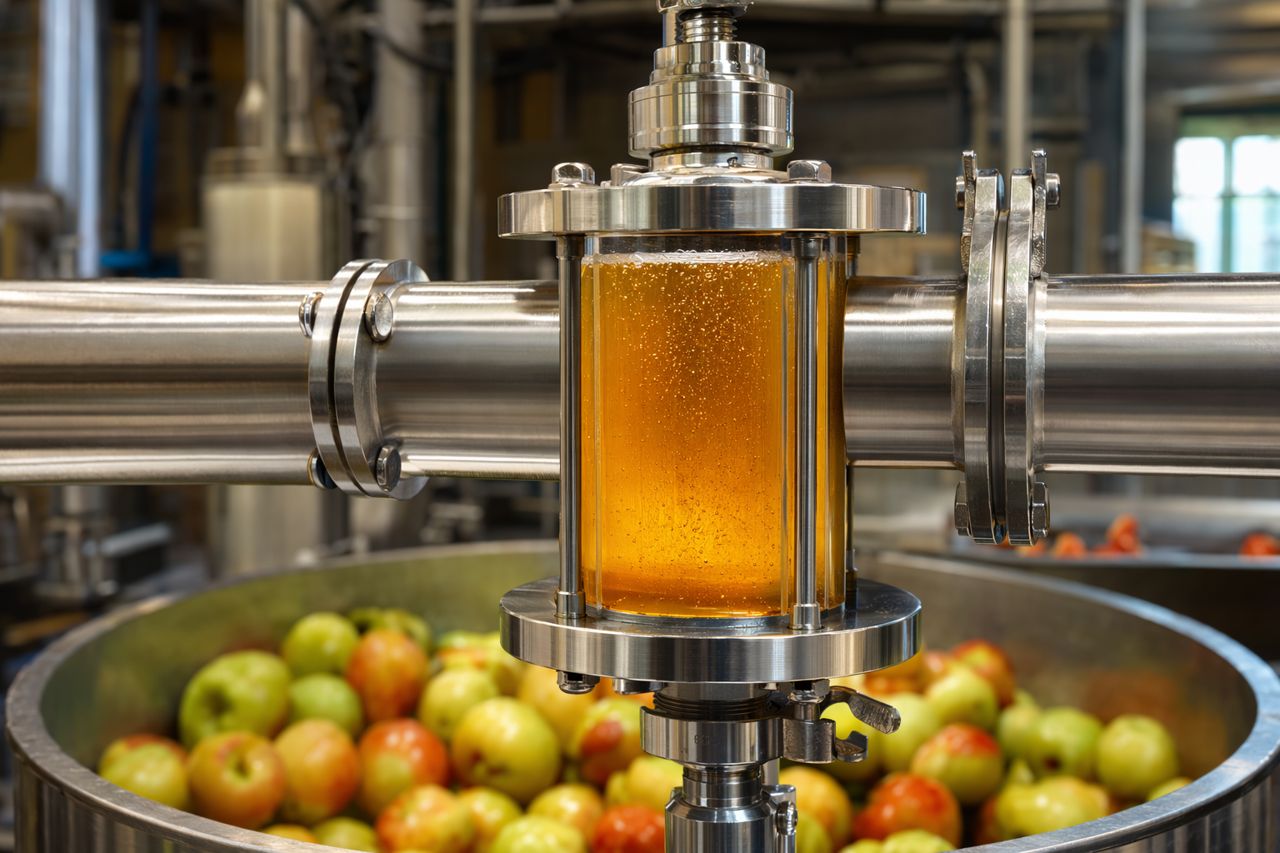
Pectinolytic enzyme systems help reduce the structure that keeps juice thick and haze-forming. In practical terms, that can mean better free-run behavior, improved press drainage, faster settling or flotation, and a cleaner path into fermentation.
A well-matched enzyme program can support:
- Lower apparent viscosity before transfer
- More consistent pump behavior across apple lots
- Reduced retained juice in pomace and lees
- Faster clarification before yeast pitch or stabilization
- Less tank time spent waiting on haze movement
- Cleaner separation between bright juice and solids
- More predictable scheduling during peak harvest
The goal is not to over-process cider. The goal is to remove the bottlenecks that prevent good cider from moving through the cellar cleanly.
Why tank turnover depends on clarification speed
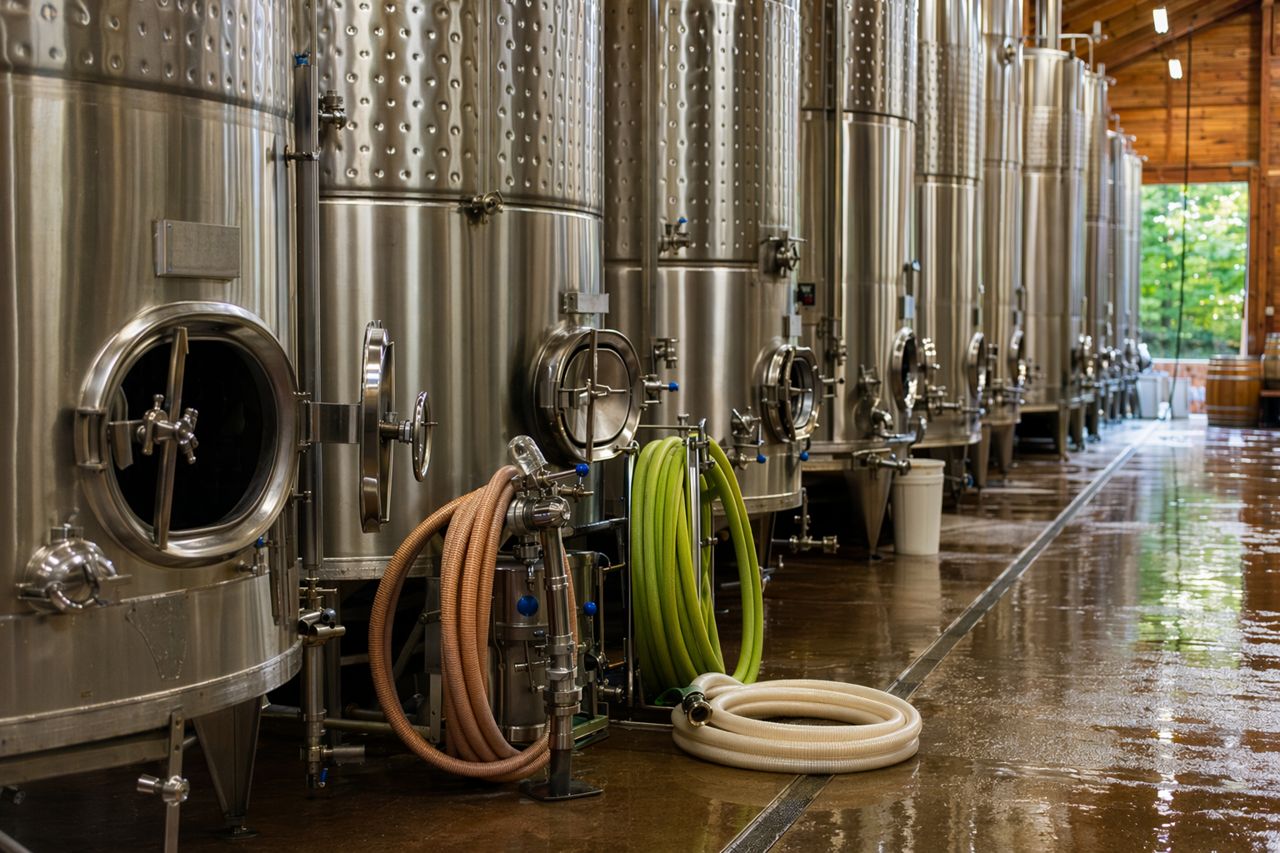
Tank turnover often looks like a fermentation or packaging issue, but the delay frequently begins upstream. If juice enters a tank with unstable pectin haze and suspended fine solids, the tank becomes a waiting room.
That waiting room has costs:
- Tanks remain unavailable for the next pressing window
- Operators spend more time sampling, checking, and moving product
- Fermentation timing becomes less consistent
- Clarification steps may need to be repeated or extended
- Lees handling can consume more cellar labor than planned
When juice clarifies on a tighter, more reliable timeline, production planning improves. The cellar crew can make confident decisions about racking, pitching, blending, chilling, or holding. That confidence is valuable in a cidery running multiple apple varieties, contracted fruit, seasonal spikes, or tight packaging commitments.
Sanitary transfer is about reducing unnecessary handling
A sanitary transfer program is strongest when the product moves with minimal friction and minimal intervention. Enzymes support that program indirectly by improving the physical behavior of the juice.
Clearer, lower-viscosity juice can help teams reduce:
- Excessive hose changes and line adjustments
- Repeated recirculation to chase clarity
- Transfers interrupted by heavy sediment movement
- Product losses from thick lees and poor separation
- Extended open-tank decision windows
This matters because sanitation is not only about what touches the product. It is also about how often the product needs to be handled.
Matching enzyme choice to the cider mill reality
Not every cider operation needs the same enzyme approach. A mill pressing dessert fruit for fresh aromatic cider has different needs than a producer handling bittersweet fruit, late-season storage apples, or high-solids fruit destined for rapid fermentation.
When evaluating an enzyme supplier for cider production, look beyond a generic label. The conversation should include:
- Apple variety mix and harvest timing
- Milling and maceration style
- Press type and pressing cycle goals
- Juice temperature profile
- Desired clarification method
- Fermentation schedule and yeast plan
- Aroma style: fresh, tannic, bright, rustic, or structured
- Current pain points in transfer, settling, and tank release
Enzymesbridge works from the process outward. The point is to recommend an enzyme fit that supports the cider you want to make and the production calendar you need to hold.
What success looks like on the floor
A well-run enzyme program should be visible in everyday cellar movement, not just in a technical file.
You should see juice behaving more consistently from the mill to the tank. Press operators should spend less time fighting sluggish drainage. Cellar teams should see cleaner separations and more predictable rack points. Production managers should have fewer surprise delays caused by haze, heavy lees, or slow transfers.
The best outcome is operational calm: bright juice moving when it should, tanks opening when the schedule says they should, and fermentations starting from a cleaner, more stable base.
Watch: cleaner transfers, faster tank release
Practical questions before changing your enzyme program
Before adjusting enzyme use, document the problem you are trying to solve. A focused diagnosis leads to a better recommendation.
Ask your team:
- Where is the bottleneck: press, transfer, clarification, or tank release?
- Does the issue appear with all fruit or only specific lots?
- Is haze delaying fermentation, stabilization, or packaging?
- Are pump loads, foam, or line interruptions increasing during peak runs?
- How much product is being left behind in pomace or lees?
- Are tanks being cleaned on schedule, or are they waiting on product movement?
These answers help identify whether the enzyme target is mash breakdown, juice clarification, viscosity reduction, or a more balanced cider-specific approach.
Enzymesbridge support for production cideries
Enzymesbridge is built for cider makers who need dependable, production-ready enzyme solutions without overcomplicating the cellar. We help high-volume cideries connect enzyme selection to measurable operating outcomes: more efficient pressing, cleaner transfers, faster clarification, better tank availability, and consistent fermentation readiness.
If tank turnover is becoming a constraint, the right enzyme program can give your process more room to breathe.
Ready to review your cider flow, clarification, and tank schedule? Request a quote through the on-site form and tell us what your mill is trying to improve.