Cider Press Yield Benchmarks by Apple Condition: Fresh, Stored, Soft, and High-Pectin Fruit
A good cider press run starts before the apples reach the mill. Fruit condition changes how mash breaks, how juice releases, how pomace drains, and how quickly the tank clears. For a production cider maker, the useful benchmark is not a single ideal yield. It is a practical range by apple condition, paired with a process decision: grind, hold, enzyme, press, settle, ferment.
Enzymesbridge works as an enzyme supplier for cider production with a focus on real mill outcomes: higher recoverable juice, steadier press cycles, cleaner separation, faster clarification, and aroma-conscious processing.
This guide gives cider mills a production-friendly way to benchmark fresh, stored, soft, and high-pectin apple lots without turning the cellar into a lab.
Why apple condition changes press yield
Apples are not just sugar, acid, tannin, and aroma. They are structure. Cell walls, pectin, soluble solids, skin integrity, and storage history all decide how the mash behaves under pressure.
In the press, that behavior shows up as:
- Free-run volume before pressure ramps
- Press cake permeability and drainage rate
- Cycle time from fill to final squeeze
- Juice turbidity and pectin haze risk
- Pomace moisture after pressing
- Downstream clarification load before fermentation
The same press can look excellent on crisp, balanced fruit and sluggish on soft, pectin-rich dessert apples. Enzyme selection and contact time help normalize those swings.
Practical benchmark ranges by apple condition
Use these as mill-floor reference ranges, not fixed promises. Variety mix, grind size, press type, fruit temperature, maturity, belt or rack loading, and operator style all shift the final number.
| Apple condition | Typical press behavior | Yield expectation | Main production risk | Enzyme opportunity |
|---|---|---|---|---|
| Fresh, firm fruit | Clean grind, good drainage, resilient pomace cake | Baseline to strong | Under-extraction if grind is too coarse | Improve juice release and early flow |
| Stored, sound fruit | Softer cell structure, variable dryness, often good sugar | Moderate to strong | Slow clarification and inconsistent lots | Stabilize extraction and reduce pectin load |
| Soft or overripe fruit | Smearing mash, compacting cake, slower drainage | Variable; can underperform despite high juice content | Press blinding and high solids carryover | Restore flow by reducing viscosity and pectin drag |
| High-pectin fruit | Thick juice, sticky pomace, persistent haze | Often below potential without treatment | Long settling time and filtration pressure | Break pectin structure for release and clarification |
Fresh, firm apples: protect the bright baseline
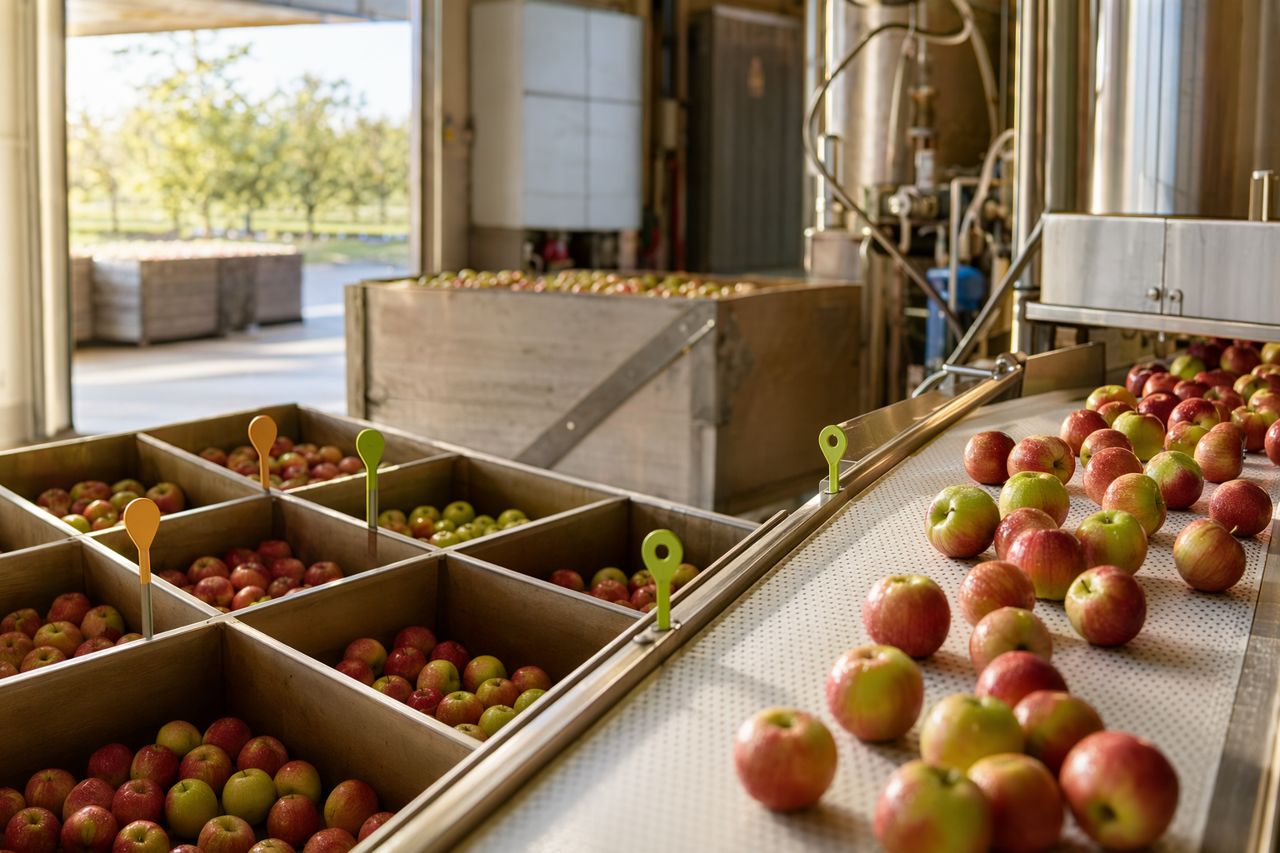
Fresh apples with good firmness usually give the cleanest benchmark. They grind evenly, form a press cake with structure, and drain with less smearing. If the variety mix has balanced tannin and acid, this is often the lot that sets the house standard.
What to measure
- Juice recovered per bin, tote, or ton equivalent
- Free-run percentage before main pressure
- Time to reach target tank volume
- Final pomace feel: damp, wet, or dripping
- Settling speed before fermentation
Enzyme strategy
For firm fruit, the goal is not to force the mash. It is to open the cell structure enough to improve release while preserving fresh apple aromatics. A well-matched pectolytic enzyme program can improve early juice flow and reduce the pressure needed to reach the same recovery.
Best fit when the mill wants:
- Shorter press cycles without harsher pressure ramps
- Better first-pass recovery
- Cleaner juice transfer into settling
- Less variation between early-season and peak-season fruit
Stored apples: manage lot-to-lot variability
Stored apples can be excellent for cider, especially when sugar, aroma, and tannin have developed. But storage introduces uneven texture. Some fruit remains firm; some softens; some loses moisture; some brings more soluble pectin into the juice.
That variability shows up as inconsistent press curves. One bin runs bright and quick. The next drags, foams, or throws haze.
Benchmark expectation
Stored, sound fruit often presses well, but it needs closer process control. If yield is strong yet clarification is slow, the press is not the only constraint. Pectin management may be the bigger lever.
Enzyme strategy
For stored lots, Enzymesbridge typically frames enzyme selection around two production questions:
- Do you need more juice from the press, or more predictable juice after the press?
- Is the problem wet pomace, slow settling, or both?
A tailored cider enzyme program can help smooth those lot differences, reduce suspended haze, and protect the fermentation schedule from delayed tank turnover.
Soft or overripe fruit: stop the mash from blinding the press
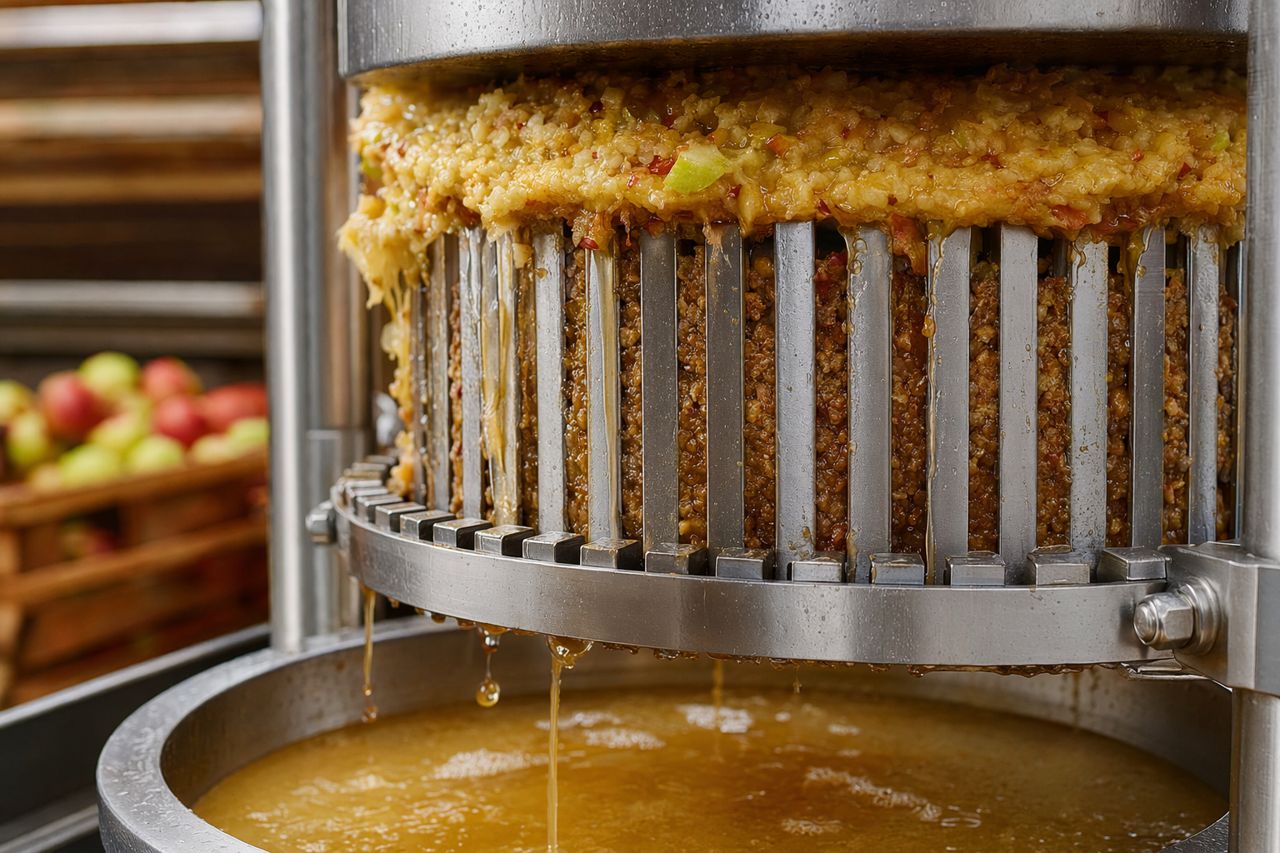
Soft fruit looks like it should press easily. In practice, it can do the opposite. Overripe apples smear during milling, pack tightly, and reduce drainage channels inside the cake. The result is slow flow, wet pomace, and juice carrying more fine solids.
Common symptoms
- Juice flow starts strong, then falls off sharply
- Press pressure rises while recovery stalls
- Pomace exits wet or pasty
- Juice is thick, cloudy, and slow to settle
- Filtration or centrifuge load increases downstream
Enzyme strategy
The objective is to reduce viscosity and pectin-driven drag before the press cake locks up. Proper enzyme contact can help juice separate from the pulp matrix earlier, improving drainage and reducing the need to push the press harder than the fruit can handle.
For soft fruit, enzyme use is often less about chasing a headline yield number and more about keeping the line moving.
High-pectin apples: yield is only half the story
High-pectin fruit can quietly tax the whole cider mill. The press may recover acceptable volume, but the juice holds haze, takes longer to settle, and can complicate clarification before fermentation or packaging.
Benchmark expectation
If high-pectin lots show only a small yield penalty but create long settling windows, the true cost appears in tank occupancy, labor, and downstream processing. That is where enzyme treatment can deliver a strong operational return.
Enzyme strategy
Enzymesbridge enzyme programs for high-pectin cider fruit focus on:
- Faster breakdown of pectin-related haze potential
- Improved juice release from the mash
- Better separation during settling or flotation
- Lower burden on filtration and polishing steps
- More consistent fermenter-ready juice
The aim is bright, fermentable cider juice without stripping away the orchard character that defines the blend.
Building your own cider mill benchmark
A useful benchmark does not need to be complicated. It needs to be repeated consistently.
Track these points for each apple lot
- Variety or blend name
- Fruit condition: fresh, stored, soft, mixed, or high-pectin suspected
- Fruit temperature at milling
- Grind setting or mill gap reference
- Mash holding time before pressing
- Enzyme addition point and contact window
- Press cycle time
- Juice recovered
- Pomace moisture impression
- Settling time to target clarity
- Fermentation start quality: turbidity, aroma, and yeast readiness
Over two or three press days, patterns become clear. You will see which fruit needs extraction support, which fruit needs clarification support, and which fruit simply needs a gentler grind.
How Enzymesbridge helps cider makers use enzymes with confidence
Enzymesbridge supplies enzyme solutions for cider production with a production-first lens. We are not here to make your process more complicated. We help you match the enzyme approach to the fruit condition, the press style, and the finished cider target.
That can mean:
- A mash enzyme program for better press yield
- A pectin-focused solution for faster clarification
- A process adjustment for soft fruit that is blinding the press
- Support for seasonal swings in apple condition
- Quote-ready supply planning for harvest and year-round production
When to revisit your enzyme program
It is worth reviewing your cider enzyme approach when you see:
- Press cycles getting longer with the same fruit volume
- Wet pomace after normal pressure ramps
- Stored fruit behaving inconsistently
- Soft fruit slowing the line
- Haze persisting longer than expected
- Clarification becoming the production bottleneck
- Aroma loss from overworking the mash or juice
A better enzyme fit can turn those symptoms into controlled process variables.
Request a quote
If you are benchmarking press yield by apple condition, Enzymesbridge can help you align enzyme selection with your fruit, press, clarification target, and production schedule.
Request a quote through the on-site form and tell us what you are pressing: fresh, stored, soft, high-pectin, or mixed-condition fruit. We will help you define a practical enzyme supply plan for your cider mill.