Cider Mill Equipment Layout for Faster Clarification: From Washer to Tank
A fast, clean clarification program does not begin at the fining tank. It begins at the washer, continues through the mill and press, and depends on where the cider maker gives enzymes the right contact, movement, and residence time.
For a hard cider mill, layout is not just stainless geometry. It decides how quickly juice leaves the pomace, how much pectin haze reaches the cellar, how often tanks wait on slow settling, and how much aroma is preserved before fermentation. As an enzyme supplier for cider production, Enzymesbridge looks at equipment layout the same way a production cider maker does: flow, contact, yield, clarity, and repeatability.
Why clarification speed is built into the line
Clarification delays usually show up in the tank, but their causes often sit upstream:
- Apples arrive with different ripeness, firmness, pectin load, and starch carryover.
- Milling may create inconsistent particle size, affecting press drainage and solids load.
- Enzyme addition may happen too late, with poor mixing or uneven contact.
- Transfer runs may shear solids, pull air, or trap pockets of untreated juice.
- Tanks may be asked to clarify juice that should have entered fermentation brighter.
The best layout gives each step a job: clean fruit, consistent mash, efficient enzymatic contact, controlled pressing, low-turbulence transfer, and properly staged clarification.
The ideal process path: washer to tank
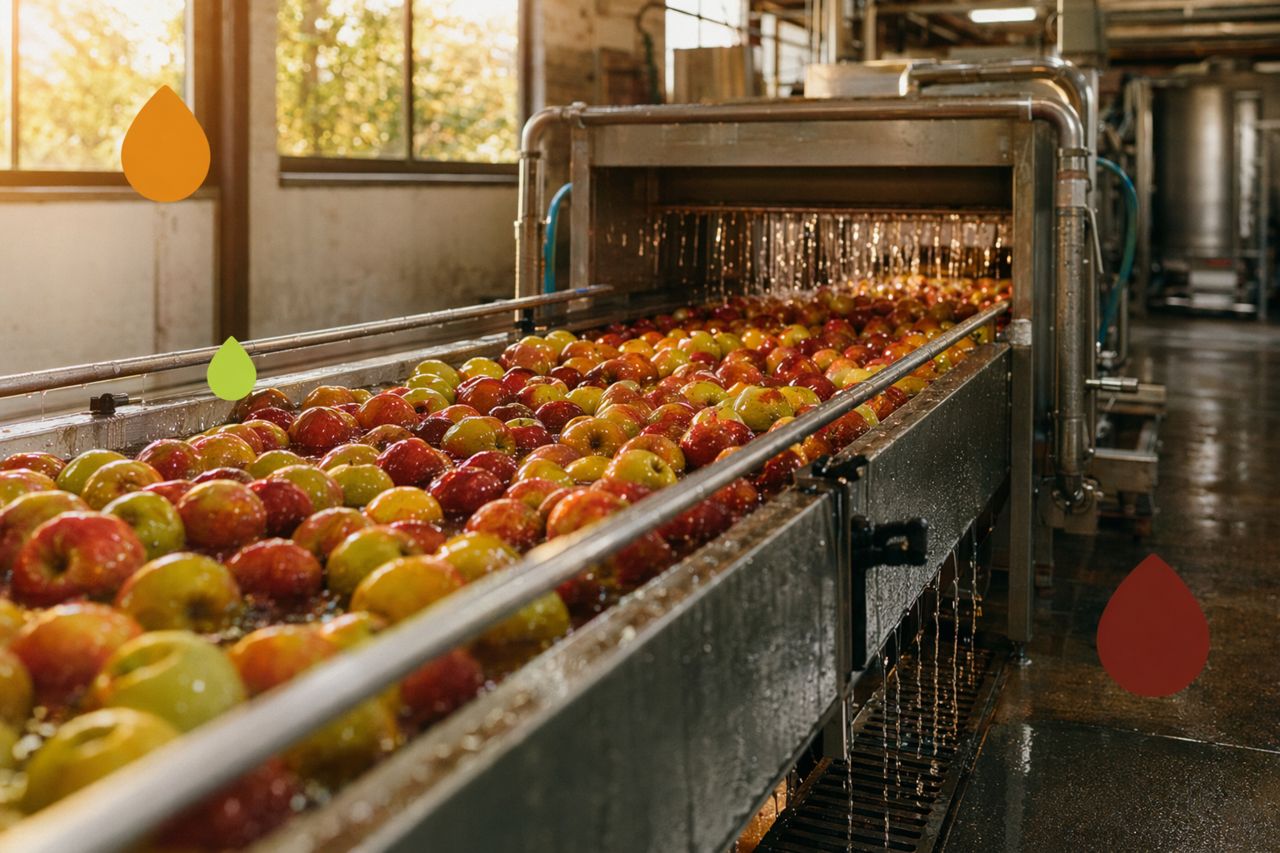
1. Washer and inspection: protect the downstream process
Clarification begins with clean fruit and disciplined sorting. Leaves, stems, rot, soil, and soft fruit pockets increase microbial pressure and solids variability. A washer and inspection belt should feed the mill evenly, not in surges.
Good layout choices include:
- A straight visual inspection zone before milling.
- Adequate drain points to prevent wash water carryover.
- Controlled elevation changes so fruit enters the mill without bruising piles.
- Space for seasonal sorting labor during high-volume harvest days.
When the fruit stream is stable, the mill and press behave more predictably. That makes enzyme performance easier to manage.
2. Milling: make a pressable pomace, not a puree
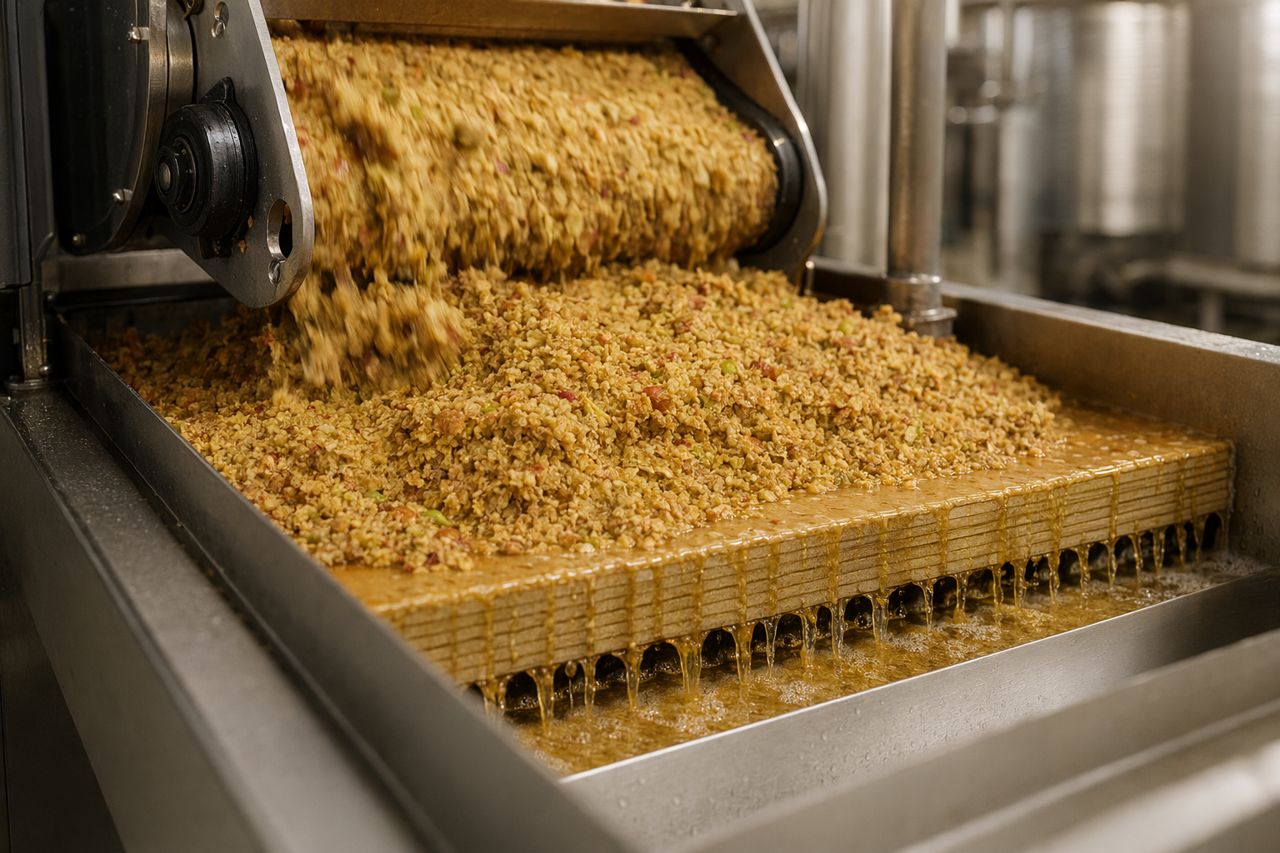
The mill sets the structure of the pomace bed. Too coarse, and juice remains locked in tissue. Too fine, and the press can blind, creating a wet cake and a heavy solids burden.
For faster clarification, the goal is a mash that supports both juice release and downstream settling. The equipment layout should allow operators to inspect mash quality immediately after milling and adjust before the press is loaded.
Practical layout notes:
- Keep the mill close to the press feed to reduce mash holding time.
- Avoid long, dead-leg conveyors where mash sits and oxidizes.
- Provide an accessible sampling point after milling.
- Leave room for a controlled enzyme addition point before pressing when the process calls for mash treatment.
Where enzyme dosing belongs in a cider mill layout
There is no single perfect dosing location for every mill. The right point depends on apple varieties, press type, desired juice profile, holding time, temperature, and clarification method.
That said, enzyme addition works best when it is not an afterthought. It needs placement, mixing, and process intent.
Common dosing points
Mash dosing before the press
Mash dosing can improve juice release and help pectin breakdown begin before free-run and press fractions are separated. It is useful when press efficiency and pomace drainage are limiting factors.
Best suited for mills that need:
- Better press throughput.
- Drier pomace discharge.
- More consistent juice release across mixed apple lots.
- Early reduction of haze-forming pectin.
Layout requirement: the enzyme addition point should be close enough to the press to fit production rhythm, but far enough upstream to allow distribution through the mash.
Juice dosing after pressing
Juice dosing is often used when the main goal is faster tank clarification, improved settling, or better preparation for fermentation. It can be easier to control when juice flow is steady and mixing is reliable.
Best suited for mills that need:
- Faster settling or flotation response.
- Brighter juice into fermentation.
- Reduced tank occupancy time.
- Cleaner racking and lower lees carryover.
Layout requirement: add enzyme into a moving juice stream with controlled mixing before the receiving tank, not into a stagnant corner of the vessel.
Split dosing
Some operations benefit from a split approach: part of the enzyme program supports press performance, while another portion supports tank clarification. This can be helpful when the mill handles highly variable apple lots or blends culinary fruit with bittersweet and bittersharp varieties.
Layout requirement: operators need clear dosing access, labeled lines, and sampling points at both stages.
Press area layout: keep drainage moving
The press is where layout decisions become visible. Slow loading, uneven mash distribution, poor press scheduling, and blocked drainage all create downstream clarification work.
A press area designed for faster clarification should support:
- Even mash loading.
- Efficient separation of free-run and press juice if desired.
- Clear access for press cake discharge.
- Short, clean juice runs to the collection point.
- Minimal turbulence and air pickup during transfer.
Enzymes can help the pomace release juice more cleanly, but they cannot fully compensate for a press layout that traps solids, backs up mash, or forces juice through chaotic pipework.
Juice transfer: reduce haze before it reaches the tank
After pressing, cider juice should move to clarification with as little abuse as possible. Excessive pumping, sharp directional changes, and poorly drained hoses can increase solids disturbance and oxygen exposure.
Design the transfer path with these priorities:
- Short runs from press pan to receiving tank.
- Hygienic pipework or hose routing with no low-point traps.
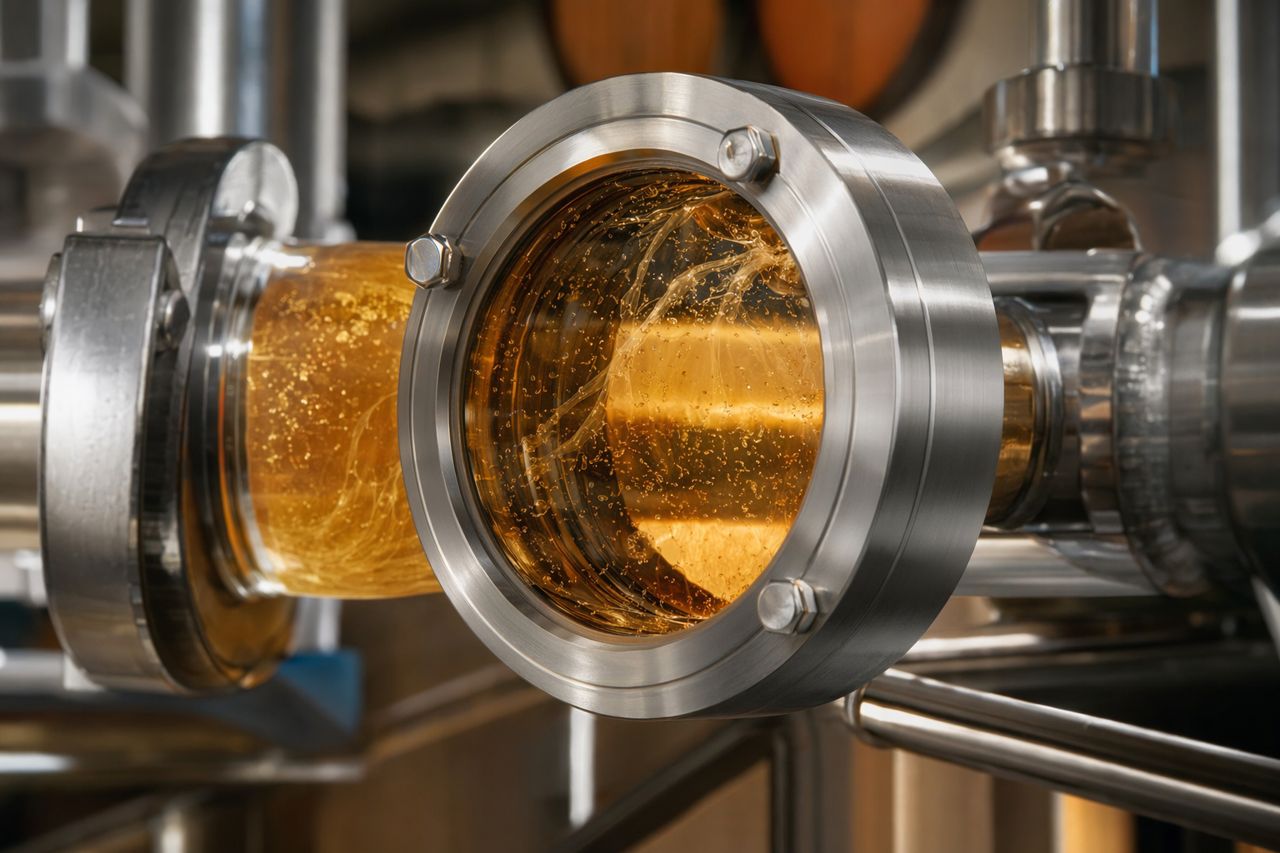
- A sight glass or sample valve near the transfer line.
- A dedicated, repeatable enzyme injection point if dosing post-press.
- Gentle mixing that distributes enzyme without beating air into juice.
A well-placed sight glass is more than a visual detail. It lets the team see changes in turbidity, flow, foam, and solids carryover while there is still time to adjust.
Tank staging for faster clarification
Clarification tanks should not be treated as passive storage. They are part of the production line.
A good tank layout allows:
- Clear segregation of untreated, enzyme-treated, and clarified juice.
- Controlled fill patterns to avoid resuspending settled solids.
- Practical access for sampling and turbidity checks.
- Racking paths that do not disturb lees.
- Scheduling flexibility when apple intake spikes.
When pectin breakdown is underway before juice reaches the tank, settling or flotation has less work to do. That can shorten clarification windows and free tank capacity for fermentation.
What faster clarification does for fermentation
Clarification is not only about appearance. It affects fermentation control.
Bright, stable juice can help cider makers:
- Reduce unpredictable solids load in fermenters.
- Improve yeast performance consistency.
- Retain fresher apple aromatics by limiting over-handling.
- Make cleaner decisions on nutrient strategy and temperature profile.
- Reduce variability between lots.
The aim is not to strip the cider. The aim is to remove the haze burden that interferes with controlled fermentation and cellar scheduling.
Layout audit: questions to ask before adding capacity
Before buying another tank or upsizing the press, walk the line from fruit intake to clarification. Ask:
- Where does fruit flow surge, pause, or pile up?
- Can operators inspect fruit and mash without stopping production?
- Is enzyme addition placed for real contact, or just convenience?
- Does the press discharge pomace cleanly, or does it create repeated delays?
- Are transfer lines short, drainable, and easy to verify as clean?
- Is there a sight point before juice enters the tank?
- Can treated juice be kept separate from untreated juice?
- Are tanks waiting because the press is slow, or because juice is slow to clarify?
These questions often reveal that the enzyme program and the equipment layout need to be designed together.
Enzyme selection for cider production teams
Enzymesbridge supplies enzyme solutions for cider mills that need practical production results, not academic complexity. Depending on the process, the right recommendation may support:
- Mash breakdown for improved juice release.
- Pectin reduction for faster clarification.
- Improved settling behavior before fermentation.
- More consistent processing across apple varieties.
- Lower handling intensity and better aroma retention.
The best enzyme program is matched to fruit, press type, contact time, clarification method, and cellar goals. It should be easy for operators to repeat during harvest pressure.
A practical layout model
For many hard cider mills, a clarification-minded layout follows this logic:
- Washer and inspection belt for clean, consistent fruit feed.
- Mill positioned close to press loading with mash access for sampling.
- Optional mash enzyme point with controlled distribution before pressing.
- Press arranged for steady loading, drainage, and clean pomace discharge.
- Juice collection and sight glass for immediate process visibility.
- Optional juice enzyme point in a moving line before the tank.
- Clarification tank with gentle fill, sampling access, and clean racking path.
- Fermentation tank receiving brighter, more predictable juice.
The layout does not have to be elaborate. It has to be intentional.
Signs your layout is costing clarification time
Watch for these production symptoms:
- Press cycles stretch as the day goes on.
- Pomace leaves the press wetter than expected.
- Juice enters tanks with inconsistent haze from lot to lot.
- Clarification timing varies too widely for reliable scheduling.
- Operators compensate with extra transfers or long holding periods.
- Fermentation tanks wait for juice to clear.
- Aroma feels muted after extended handling.
If several of these are familiar, the issue may not be a single piece of equipment. It may be the interaction between layout, transfer, and enzyme contact.
Build the enzyme point into the equipment plan
The most expensive enzyme addition point is the one installed after the line is already crowded. When planning a new mill, expansion, or seasonal retrofit, reserve space for:
- Secure enzyme storage near the process area.
- Clean, labeled dosing access.
- A mixing point that does not aerate juice unnecessarily.
- Operator-safe handling space.
- Sampling before and after treatment.
- Clear separation from cleaning chemicals and non-process materials.
This keeps the enzyme program visible, repeatable, and part of normal production discipline.
The takeaway
Faster clarification is not only a tank decision. It is a line decision. The washer stabilizes the fruit stream, the mill sets pomace structure, the press controls solids release, the transfer path protects juice quality, and the enzyme addition point determines how early and evenly pectin breakdown begins.
When the layout and enzyme program work together, cider mills can gain better press efficiency, quicker clarification, brighter juice into fermentation, and more predictable production days.
Request a production-fit recommendation
Planning a cider mill expansion, improving press throughput, or trying to shorten clarification time before fermentation? Enzymesbridge can help match enzyme selection to your fruit, layout, press style, and tank schedule.
Request a quote through the on-site form and tell us how your line is configured from washer to tank.