Cider Filtration Bottlenecks: What to Fix Before Blaming the Filter
Slow cider filtration rarely starts at the filter. By the time pressure climbs, flow falls, or sheets blind early, the real issue is often already in the juice: pectin load, fine pomace carryover, starch-positive fruit, rushed settling, unstable fermentation lees, or enzyme timing that did not match the apple mix.
For a hard cider mill, filtration is not just a polishing step. It is a production checkpoint where upstream choices become visible. If the filter is slowing the line, replacing media may buy time, but it will not fix the cause.
Enzymesbridge supports cider makers as an enzyme supplier for cider production, helping mills improve press yield, reduce viscosity, accelerate clarification, protect aroma expression, and move cider toward a more predictable filtration window.
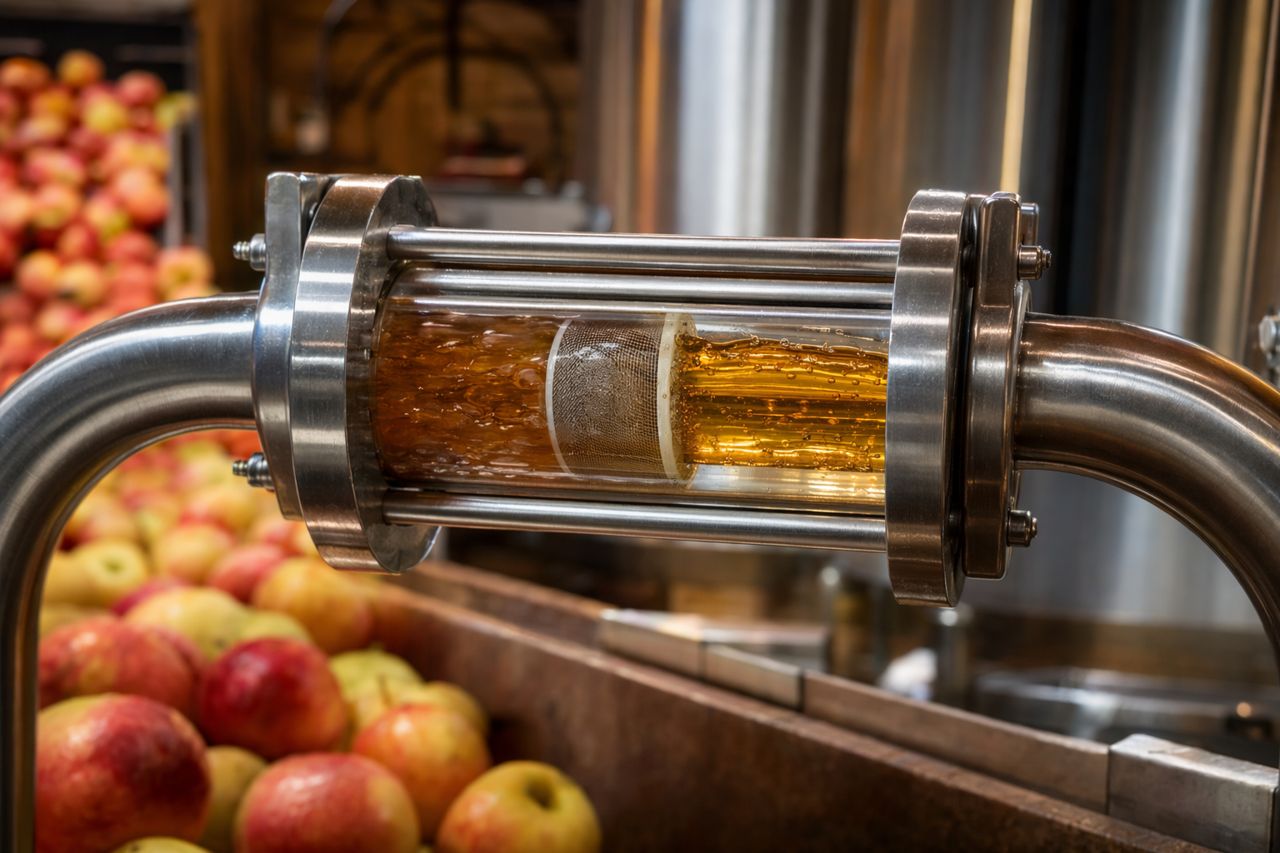
The filter is a symptom reader
A cider filter tells you what the cellar has been carrying forward.
Common symptoms include:
- Rapid pressure rise soon after start-up
- Shorter-than-planned filter runs
- Dull haze returning after a bright pass
- Unstable flow from tank to tank
- Excessive pre-filter loading
- Slow settling after fermentation
- Cider that looks bright in tank but plugs under load
The useful question is not, “Why is the filter failing?” It is, “What did we send to the filter?”
Bottleneck 1: Pectin that was never fully addressed
Apple pectin is one of the most common filtration drag points in cider production. High-pectin juice holds viscosity, traps suspended solids, and can make otherwise sound cider behave heavy through filtration.
Pectin pressure changes with:
- Apple variety and maturity
- Dessert fruit versus bittersweet or culinary blends
- Storage condition and fruit breakdown
- Mash holding time
- Press style and extraction intensity
- Temperature during juice handling
A cider may look acceptable after rough settling and still contain enough colloidal load to blind filtration media. In that case, the filter is not underperforming. It is being asked to do clarification work that should have happened earlier.
What to fix before changing media
Review where pectolytic enzyme is added, how well it is dispersed, and whether contact time fits the mill schedule. For many producers, moving enzyme strategy closer to milling, mash treatment, or early juice handling creates a more filterable cider before fermentation even begins.
Bottleneck 2: Press solids and fine pomace carryover
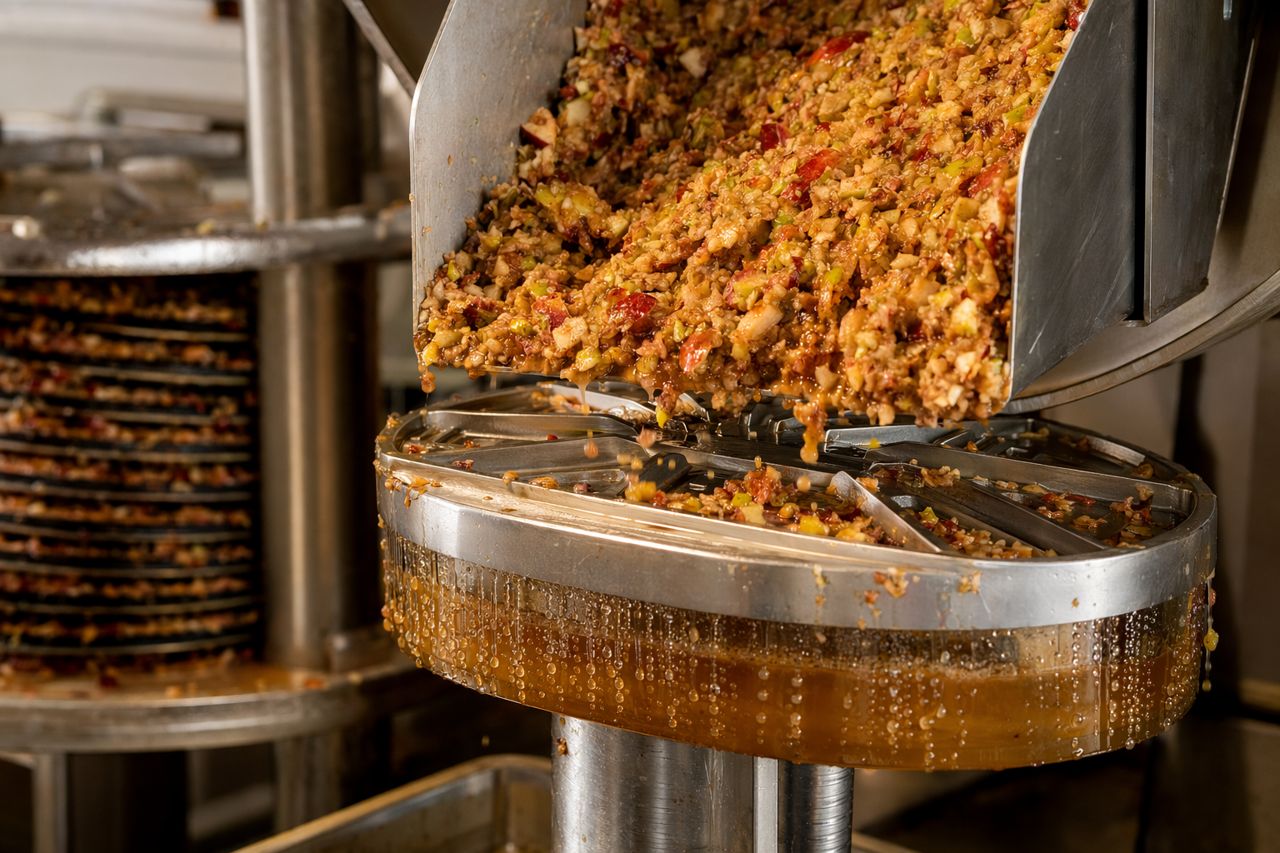
A hard press can raise yield while sending more fine solids downstream. Those fines are not always obvious in a sample jar. They may remain suspended, settle slowly, and compact aggressively once filtration begins.
Watch for:
- Muddy juice exiting late press fractions
- Sharp swings between first-run and later-run juice
- Heavy lees after fermentation
- Filter runs that start clean, then collapse quickly
- Excessive sediment in transfer lines or tank cones
The solution is rarely one adjustment. It is usually a combination of milling texture, mash handling, pressing curve, enzyme selection, and pre-filtration settling discipline.
Bottleneck 3: Starch-positive or immature fruit
Early-season fruit, stressed fruit, and some incoming apple lots can carry starch and unconverted material that complicates clarification. In production, this can show up as persistent haze, slow settling, or filtration that feels unpredictable from batch to batch.
If filtration problems cluster around certain fruit lots, do not treat the filter room as the only investigation point. Look upstream at raw material maturity, apple blend, and how that fruit responded during maceration and pressing.
Bottleneck 4: Fermentation carryover
Even well-pressed juice can become difficult to filter after fermentation if yeast, nutrients, fining residues, and colloids remain unsettled. A cider that ferments cleanly can still carry haze-active material into the bright tank.
Fermentation-related bottlenecks often show up as:
- Slow lees compaction
- Haze that reappears after racking
- Brightness that changes with temperature
- Pre-filter loading that varies by yeast strain or fermentation speed
- Aromatics that dull after aggressive polishing
A good enzyme program should support filterability without stripping the sensory character that makes the cider worth bottling.
Bottleneck 5: Timing enzyme use around the wrong constraint
Enzymes are not a last-minute rescue tool only. In cider production, they are process tools. Used at the right stage, they help reduce viscosity, release juice, improve settling, and make filtration more predictable.
Potential application windows include:
- Mash treatment before pressing
- Juice clarification before fermentation
- Post-fermentation clarification support
- Pre-filtration preparation for difficult lots
The best window depends on your mill layout, tank availability, apple mix, desired style, and bottling schedule. Enzymesbridge helps cider producers choose enzyme solutions around the actual bottleneck, not a generic recipe.
A practical troubleshooting sequence
Before blaming the filter, walk the cider back through the process.
1. Compare easy and difficult lots
Look for patterns by apple variety, harvest timing, press fraction, fermentation profile, and tank history. If one fruit stream always filters slowly, the answer is probably upstream.
2. Check juice behavior before fermentation
Was the juice viscous? Did it settle cleanly? Did clarification lag? Did the press send fine solids forward? These details predict filtration performance.
3. Review enzyme addition point and mixing
An enzyme cannot perform well if it is added too late, poorly distributed, or used against the wrong substrate. Confirm that the product choice and timing match the cider’s actual load: pectin, suspended solids, haze risk, or press efficiency.
4. Protect aroma while improving brightness
Cider filtration is not just about clarity. It also affects mouthfeel, fruit lift, and fermentation character. The goal is a cider that runs clean and still tastes alive.
5. Treat the filter as the final polish, not the main clarifier
If the filter is doing bulk clarification, capacity will suffer. Improve the cider before it reaches the filter, and the filter room becomes more stable, faster, and easier to schedule.
Where Enzymesbridge fits
Enzymesbridge supplies enzyme solutions for cider mills that need dependable production outcomes:
- Faster juice release and improved press performance
- Lower viscosity before fermentation
- More efficient settling and racking
- Reduced filtration pressure events
- Shorter clarification delays
- Better tank-to-tank consistency
- Bright cider with aroma and structure intact
We work with production teams that need calm, technical support without unnecessary complexity. Tell us your fruit profile, press setup, clarification step, filtration format, and where the slowdown appears. We will help you narrow the cause and select an enzyme approach that fits your line.
Watch: before you blame the filter
This faceless one-minute explainer summarizes the upstream causes that make cider filtration feel like a filter problem.
Request a quote
If filtration is setting the pace for your cider line, Enzymesbridge can help you evaluate the enzyme side of the problem before you buy more filter media.